Blue Ivy Carter has grown up across one of the most valuable private real estate portfolios in American entertainment — a collection built by her parents, Beyoncé and Jay-Z, over nearly two decades. Their documented purchases alone total more than $310 million: a record-breaking $200 million estate in Malibu, an $88 million compound in Bel Air, a $26 million Stanford White–designed waterfront home in East Hampton, and a converted 1920s church in New Orleans’s Garden District.
Add in a Mediterranean-style villa on Miami’s Indian Creek Island and a rumored 58-acre estate now taking shape in England’s Cotswolds, and the picture is a family that treats property the same way it treats music and business — as something to build with intention and hold for the long term.
Every Blue Ivy Carter house in this collection works as both a family residence and a financial asset. Below is a complete, fact-checked look at every property in the Carter family portfolio — what it cost, when they bought it, and why each one made the cut.
The Carter Family Property Portfolio at a Glance
| Property | Location | Purchased | Price | Size |
|---|---|---|---|---|
| Malibu mansion | Paradise Cove, CA | 2023 | $200 million | ~30,000–40,000 sq ft (reports vary) |
| Bel Air estate | Bel Air, CA | 2017 | $88 million | 30,000 sq ft |
| Pond House | East Hampton, NY | 2017 | $26 million | 12,000 sq ft |
| New Orleans church conversion | Garden District, New Orleans | 2015 | Undisclosed | 13,000 sq ft |
| Indian Creek Island villa | Miami, FL | — | Undisclosed | — |
| Tribeca penthouse | New York, NY | 2004 | $6.85 million | 8,000 sq ft + terrace |
| Cotswolds estate (rumored) | Gloucestershire, UK | Reported in negotiation | Undisclosed | 58 acres of land |
Two more properties never appear on ownership records but are part of the story every fan asks about: a rented Hamptons “Sandcastle” and a Malibu maternity rental, both covered further down.
The Evolution of the Carter Family Real Estate Empire
The Carters’ property history moves in three clear phases: an urban phase built around Manhattan apartments, an expansion phase driven by a growing family and a three-year hunt for a permanent Los Angeles home, and a strategic phase focused on architectural landmarks that can’t be recreated.
1. The Urban Phase (2004–2012)
Jay-Z bought an 8,000-square-foot Tribeca penthouse in 2004 for $6.85 million — a converted 1929 warehouse with a 3,000-square-foot terrace. Beyoncé followed in 2005 with a Manhattan condo overlooking Central Park, interiors by Parisian designer Jacques Grange; she sold it in 2017 for roughly $9.95 million. The Tribeca penthouse is where the couple held their 2008 wedding.
2. The Expansion Phase (2014–2017)
Once Blue Ivy arrived in 2012, the couple began hunting for a permanent Los Angeles base — and it took three years. They were reportedly outbid on a Beverly Hills home by Minecraft creator Markus Persson, then lost a bidding war on another property to designer Tom Ford. In the meantime, they leased two separate Holmby Hills rentals: the first at roughly $150,000 a month, and a second — once owned by former Dodgers owner Frank McCourt — after the first rental sold out from under them in 2014, leaving them 60 days to relocate.
The search ended in August 2017, when they closed on the Bel Air estate — followed, just a month later, by the Hamptons Pond House. That same year, ahead of the birth of twins Rumi and Sir, Beyoncé rented a Malibu compound for a reported $400,000 a month as a maternity retreat, separate from the mansion they’d eventually buy six years later.
3. The Strategic Phase (2015–present)
Recent acquisitions point to a sharper focus on architectural landmarks. The New Orleans church conversion — built as Westminster Presbyterian Church in the 1920s, later a ballet theater — entered the portfolio in 2015; Beyoncé’s mother, Tina Knowles, was born and raised in Louisiana. The Malibu estate, designed by Pritzker Prize–winning architect Tadao Ando, represents the peak of this approach: an eight-acre, cliffside property that took its original owners 15 years to build and cannot be replicated. Most recently, the couple has reportedly been finalizing a 58-acre estate in the Cotswolds, with neighbors including Simon Cowell and the Beckhams — as of this writing, still unconfirmed but described by sources as a “done deal.”
The $88 Million Bel Air Estate
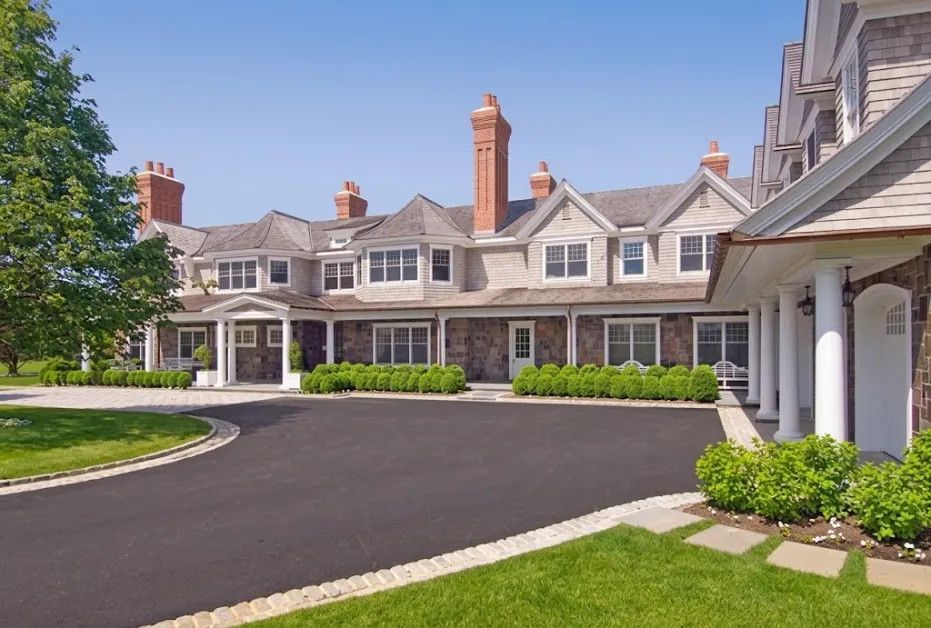
The Bel Air estate sits at 454 Cuesta Way, in the neighborhood’s private East Gate area. The Carters’ initial bid was $120 million against a $135 million asking price; the deal closed in August 2017 at $88 million, financed with a roughly $52.8 million mortgage. The 30,000-square-foot compound — spread across six separate structures on nearly two acres — was developed by Dean McKillen, son of Irish billionaire property investor Paddy McKillen, with architecture credited to Paul McClean. It has eight bedrooms, 11 bathrooms, a 15-car garage, four swimming pools, and bulletproof windows throughout.
The three-year search that led here was not smooth. Before landing on Cuesta Way, the couple was outbid on a 23,000-square-foot Beverly Hills home (Markus Persson paid a then-record $70 million for it) and lost a second bidding war on a traditional 10-bedroom property to Tom Ford.
For Blue Ivy and her younger siblings, the estate’s hillside position and gated perimeter provide a childhood mostly out of public view, with security staff living on-site.
The $200 Million Malibu Mansion
Perched above Paradise Cove on roughly eight acres, the Malibu estate is the most valuable property in the family’s portfolio and, at the time of sale in 2023, the most expensive residential purchase in California history — surpassing the previous record of $177 million set by Marc Andreessen in 2021. Reported figures vary: it was listed at $295 million, and while TMZ and PEOPLE cite a final price around $200 million paid in cash, Robb Report and the Wall Street Journal have put the figure closer to $190 million. Square footage is similarly reported anywhere from 30,000 to 40,000 square feet, depending on the source.
Why the Tadao Ando Design Matters
Tadao Ando is a self-taught, Pritzker Prize–winning architect known for mastering poured concrete and for a design philosophy sometimes called “critical regionalism” — architecture built in harmony with its surroundings rather than in competition with them. The Malibu estate was originally commissioned by art collector William “Bill” Bell and took roughly 15 years to complete. Smooth, board-formed concrete walls, geometric massing, and carefully placed openings track natural light across the interior throughout the day, while floor-to-ceiling glass frames the Pacific rather than competing with it.
The property notably survived the 2025 Los Angeles-area wildfires largely undamaged — a result credited to both its coastal position and the fire resistance of poured concrete construction.
The East Hampton Pond House
Located at 81 Briar Patch Road on Georgica Pond, the Pond House was originally designed by Stanford White — the architect behind Madison Square Garden and many of the Gilded Age’s most celebrated buildings. The Carters bought it in September 2017 for $26 million, a steep discount from its original $39.5 million asking price when it first listed in 2009.
The 12,000-square-foot home was extensively renovated by Hamptons builder Jeffrey Colle, who famously rotated the entire structure 90 degrees so its living room faces west over the pond instead of north. It has seven bedrooms and seven to nine bathrooms (sources vary), 203 feet of direct water frontage, a separate 1,800-square-foot guesthouse, and sits adjacent to a 17-acre meadow preserve owned by the Nature Conservancy — a buffer that keeps the surrounding land permanently undeveloped. Interior details include hand-carved heated marble tubs, quarter-sawn white oak paneling with a hand-applied French chalk finish, and hand-pegged parquet de Versailles flooring.
Beyoncé reportedly recorded portions of her self-titled 2013 album at the property. In 2021, the couple tried to buy an adjacent 2.7-acre parcel to expand the compound, but lost that bid to the Peconic Land Trust, a conservation nonprofit that preserved the land as permanent open space.
Not the Same House: The Hamptons “Sandcastle” Rental
Before buying the Pond House, the family rented a different, far larger Hamptons property known as the Sandcastle — a 31,000-square-foot Bridgehampton mansion built by developer Joe Farrell in 2005 and listed at various points between $43.5 million and $59.5 million. The Carters rented it for a single August at roughly $400,000 for the month. It came with a two-lane bowling alley, a virtual golf course, an indoor skateboard half-pipe, a rock-climbing wall, a media room, and a home disco. They never owned it.
The New Orleans Church Conversion
In the Garden District, the Carters own a roughly 13,000-square-foot home converted from what was originally Westminster Presbyterian Church, built in the 1920s. The property later operated as a ballet theater before its conversion to a residence, and the Carters acquired it in 2015. A 2021 fire damaged the property, after which it was briefly listed for sale between $3.5 and $4.45 million before being pulled off the market. Google Street View still shows the address blurred, consistent with continued private ownership.
The Indian Creek Island Villa
The family also owns a Mediterranean-style villa on Miami’s Indian Creek Island, a barrier island with only about 35 residences that has earned the nickname “Billionaire Bunker” for its concentration of ultra-wealthy owners. Public pricing and purchase-date details for this property remain undisclosed.
The Rumored Cotswolds Estate
As of recent reporting, Beyoncé and Jay-Z are said to be finalizing the purchase of roughly 58 acres of farmland in England’s Cotswolds, with planning permission already in place for a country estate described in architectural drawings as blending “timeless materials with contemporary architecture.” The land sits near neighbors including Ellen DeGeneres, Portia de Rossi, Simon Cowell, and the Beckhams. The couple reportedly toured the site by helicopter before entering negotiations. This purchase has not been publicly confirmed and should be treated as a reported deal rather than a finalized one.
Blue Ivy Carter’s Own Rising Profile
The Blue Ivy Carter house collection comes with extraordinary privilege, but Blue Ivy has increasingly built an identity that extends beyond her family’s real estate. She became the youngest Grammy winner in history for her contribution to “Brown Skin Girl” from The Lion King: The Gift, a genuine artistic credit rather than an honorary one. She later voiced Princess Kiara in Mufasa: The Lion King, a real step into film work that showed range beyond her family name.
Beyoncé herself grew up in Houston’s Third Ward, a working-class neighborhood on Rosedale Street — a contrast that underscores how dramatically the family’s circumstances have shifted within a single generation.
The Investment Logic Behind the Portfolio
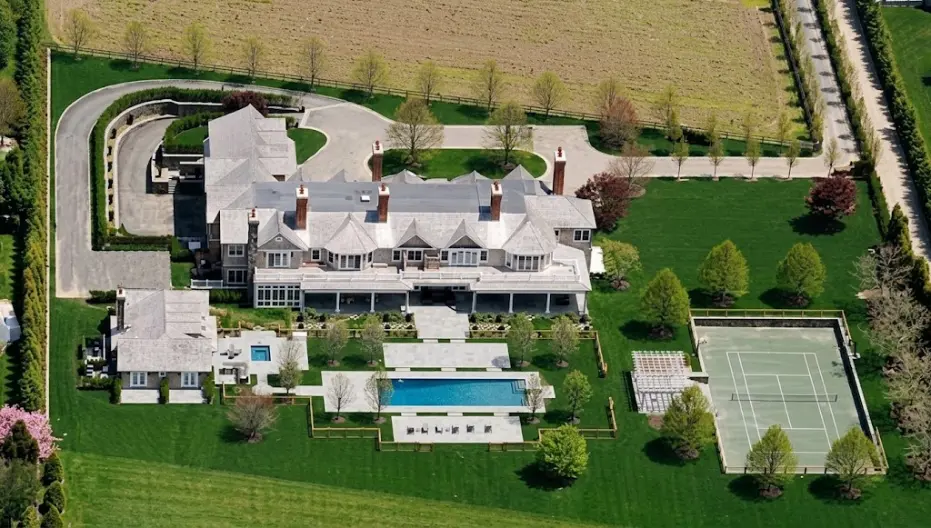
Jay-Z is hip-hop’s first certified billionaire, and Beyoncé runs a business spanning music, fashion, and entertainment; Forbes has placed their combined net worth above $1 billion, with some more recent estimates closer to $3 billion. Their property choices reflect that scale. Rather than buying on impulse, they’ve concentrated in markets where new supply is structurally limited — coastal Malibu, gated Bel Air, protected Georgica Pond frontage, a barrier island with 35 total residences — places where land scarcity, not square footage or finishes, is what actually drives long-term value.
That said, public records only fully document the purchase prices of four properties (Bel Air, Malibu, the Pond House, and the Tribeca penthouse), which together total roughly $311 million. Claims about the portfolio’s current combined market value, or a specific dollar figure of appreciation, aren’t supported by any public appraisal — so treat “$300+ million” as a floor based on purchase prices, not a current valuation.
Security and Privacy for the Children
Security at the Bel Air estate includes bulletproof glass throughout. Across the properties, gated perimeters, on-site security staff, and setback positioning are consistent design choices rather than afterthoughts — features built into the architectural brief from the start, aimed at giving Blue Ivy, Rumi, and Sir a private, ordinary childhood behind extraordinary walls.
Conclusion
The Carter family’s real estate portfolio reflects the same discipline the couple brings to their careers: patience, scarcity-driven decision-making, and a preference for irreplaceable design over square footage alone. From Tadao Ando’s concrete minimalism in Malibu to Stanford White’s century-old craftsmanship in the Hamptons, each confirmed purchase tells a specific, documented story — and the properties still just rumored, like the Cotswolds estate, suggest the collection isn’t finished growing.

