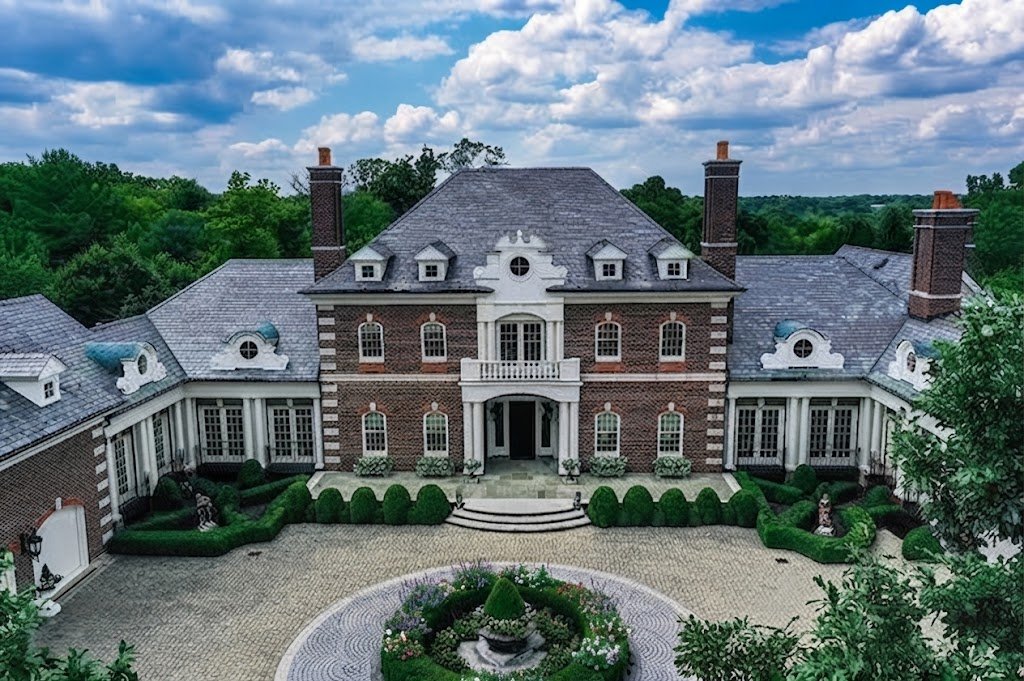
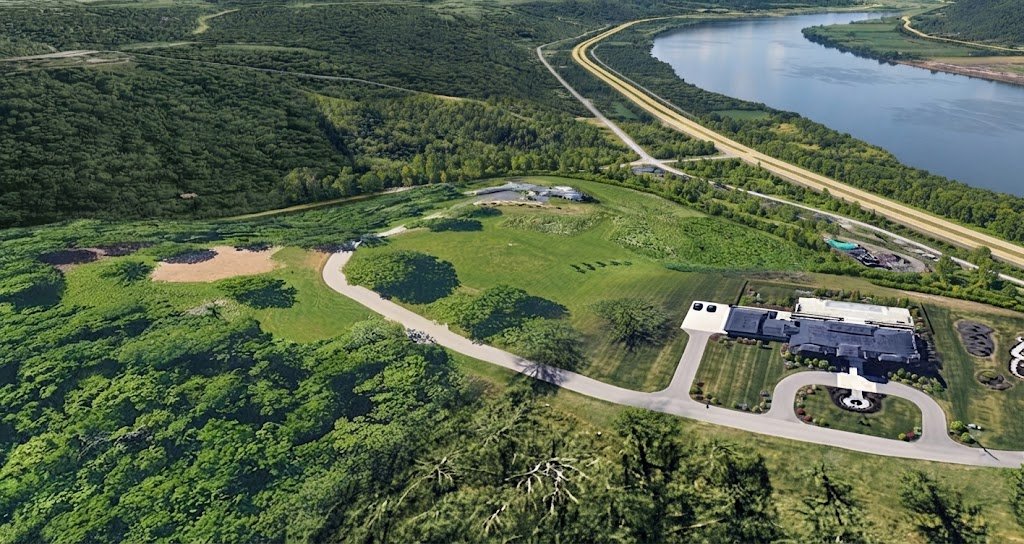
Joe Burrow’s house is a 7,370-square-foot mansion in Anderson Township, Ohio, purchased in 2023 for $7.5 million. The home sits on a private 3-acre gated property with views of the Ohio River. It includes four bedrooms, six bathrooms, and was built in 2014. Burrow bought it fully furnished after signing a contract extension with the Cincinnati Bengals.
On December 9, 2024, while Burrow was playing a Monday Night Football game in Dallas against the Cowboys, intruders broke into the home and stole nearly $300,000 in jewelry and clothing — including custom diamond necklaces engraved with his jersey number. The burglary was part of a broader pattern of organized theft targeting NFL players.
Burrow first arrived in Cincinnati after the Bengals selected him first overall in the 2020 NFL Draft. Before the Anderson Township purchase, he lived in a 2,900-square-foot home in Cincinnati’s Columbia-Tusculum neighborhood, bought in 2020 for $835,000.
The property’s design, its location, and the events that followed its purchase tell a larger story about fame, security, and how professional athletes build private lives under constant public attention.
The Architecture and Appeal of the Property
The estate sits in Hamilton County within a gated community in Anderson Township. Mature trees and a white wooden fence surround the property, blocking sightlines from the road. For Burrow, it represented a deliberate step up from his earlier living arrangements — a home built for comfort and long-term privacy.
Location and Neighborhood Context
Finding the right home as a professional athlete means balancing accessibility with seclusion. Burrow’s property delivers both — tucked away from public view yet connected to the broader Cincinnati area.
The Allure of Anderson Township and Hamilton County
Anderson Township is known for spacious lots, natural beauty, and a strong sense of community. Located in Hamilton County, southeast of downtown Cincinnati, it offers a quiet suburban setting that appeals to families and public figures alike. Large, wooded parcels give residents a degree of separation from the street — especially important when your face is on television every Sunday.
Proximity to the Ohio River and Columbia-Tusculum
The property overlooks the Ohio River, with wooded terrain and waterfront views forming a natural barrier from the outside world.
Before this purchase, Burrow split his time between his parents’ home and a 2,900-square-foot house in Cincinnati’s Columbia-Tusculum neighborhood. He had bought that property in 2020 for $835,000 — just five miles from Paycor Stadium, the Bengals’ home turf. Columbia-Tusculum is one of Cincinnati’s oldest neighborhoods, known for its historic architecture and river proximity. The move to Anderson Township marked a major step up in both scale and privacy.
Design Elements of the $7.5 Million Mansion
Built in 2014, the home spans approximately 7,370 square feet. Its design emphasizes open, light-filled spaces with clean lines and high-end materials. Large windows draw the outdoors in, connecting interior living areas with the surrounding landscape.
The Modern Aesthetic and Interior Layout
Inside, the layout prioritizes flow and functionality. The open floor plan lets natural light move freely through the main living areas. Stone, wood, and glass reinforce the home’s connection to its wooded setting. With four bedrooms and six bathrooms, the space works for both everyday living and hosting. Burrow purchased it fully furnished and settled in immediately after closing.
The Pool House and Outdoor Living Spaces
Burrow has expressed interest in adding a pool house — partly to increase privacy and block sightlines from neighboring properties. The wooded 3-acre lot already provides a natural screen, but the new structure would add another layer of seclusion.
Life in Cincinnati: Why the Bengals Star Chose This Spot?
When the Bengals selected Burrow with the first overall pick in the 2020 NFL Draft, he arrived in Cincinnati as one of the most anticipated quarterback prospects in years. A home base was an early priority, but finding the right fit took time. His initial purchase — the Columbia-Tusculum house — served him well in his early years with the team. As his career and earnings grew, though, so did his needs.
The contract extension that followed his breakout seasons made the Anderson Township purchase possible. It also signaled a long-term commitment to the city and the franchise. For a player who was born in Ames, Iowa, and starred at LSU, putting down roots in Cincinnati was a deliberate choice.
The Connection to the Community
Anderson Township offers something hard to find when you’re one of the most recognizable athletes in the state: normalcy. Neighbors greet each other at local shops. The community is tight-knit without being intrusive. For Burrow, it’s a place to step away from the intensity of game preparation and recovery — an important consideration given his history of significant injuries dating back to his time at Ohio State.
Proximity to Coldstream Country Club
The estate sits next to the Coldstream Country Club, one of Cincinnati’s premier private clubs. Covering 190 acres with a championship 18-hole golf course, it provides a private setting for recreation and socializing. For Burrow and other athletes nearby, the appeal is clear — world-class amenities without leaving the neighborhood.
Balancing Privacy and Public Life
Living as the face of a major NFL franchise means accepting a certain level of visibility. But Burrow has consistently sought to keep his personal life out of the spotlight. The gated property, the wooded lot, the security detail — all of it reflects someone who values his private space. The challenge, as events would later demonstrate, is that even carefully managed boundaries can be breached.
The Burglary Incident: A Closer Look at the Security Breach
On the evening of December 9, 2024, while the Bengals were in Dallas for a Monday Night Football matchup against the Cowboys, a group of intruders entered Burrow’s Anderson Township home. The break-in was not random. It was timed, targeted, and carried out with a level of planning that has since drawn the attention of federal investigators.
Timeline of the Event
Authorities believe the burglary took place between approximately 6 p.m. and 8 p.m. The timing was deliberate. Burrow’s home was protected by a private security detail, but the intruders appear to have exploited a shift change at around 6 p.m. During the transition, security personnel walked the perimeter and reported no broken windows.
Security camera footage later captured a man carrying luggage through the wooded area behind the home — the same tree-lined terrain that normally provides the property with its sense of seclusion.
What Was Taken
The stolen goods were valued at nearly $300,000 — jewelry and clothing, including Burrow’s “JB9” and “#9” diamond necklaces. Those custom pieces, tied directly to his identity, made the violation feel even more personal.
The Investigation and Arrests
The break-in was connected to a broader string of burglaries targeting NFL athletes nationwide. Federal investigators moved quickly.
Within days, a routine traffic stop led to the arrest of three Chilean nationals: Jordan Francisco Quiroga Sanchez, 22; Bastian Alejandro Orellana Morales, 23; and Sergio Andres Ortega Cabello, 38.
During the stop, a suspect was seen deleting photographs from his phone — images of the stolen goods and the back of Burrow’s home. Additional photos showed the three men in southeast Florida days after the burglary, posing with luxury luggage and wearing the stolen jewelry. One image captured a fourth, unidentified man alongside them.
On February 5, 2025, the three men were formally indicted in a federal court in Cincinnati. The case was handled by the U.S. Attorney’s Office for the Southern District of Ohio.
Burrow’s Response
Burrow addressed the burglary publicly, expressing both frustration and a desire to protect what remained of his privacy.
“I feel like my privacy has been violated in more ways than one. And way more is already out there than I would want out there and that I care to share, so that’s all I got to say about that.”
The Rise of Organized Theft Groups in the Region
The burglary was not an isolated incident. It fit a pattern law enforcement agencies nationwide have been tracking — organized theft operations targeting professional athletes and other high-profile individuals.
Understanding South American Theft Groups
Federal investigators have identified organized groups, often composed of South American nationals, who travel to the United States to carry out burglaries in affluent neighborhoods. These groups are mobile and disciplined. They conduct surveillance, identify security vulnerabilities, and execute with speed and precision.
The three Chilean nationals arrested in the Burrow case fit this profile. Their movements — from Cincinnati to southeast Florida in the days after the break-in — show how quickly these groups relocate.
Modus Operandi and Target Selection
These groups tend to follow a consistent playbook:
- They scout neighborhoods and study daily routines, looking for windows when homes will be empty.
- They monitor security operations, including shift changes for private guards — the exact vulnerability exploited in Burrow’s case.
- They move fast, entering and exiting within a narrow timeframe to limit detection.
- They relocate quickly after a job, making it harder for law enforcement to track them across jurisdictions.
The targeting of professional athletes is deliberate. Game schedules are public, making it easy to know when a player will be away from home.
Law Enforcement Responses in Hamilton County
Hamilton County authorities have coordinated with federal agencies to address the growing threat. The Burrow case demonstrated the value of that partnership — suspects were apprehended through a combination of local policing and federal investigative resources. Phone evidence proved critical in building the case.
| Feature | Traditional Burglary | Organized Theft Groups |
|---|---|---|
| Planning | Minimal | Extensive surveillance |
| Targeting | Opportunistic | High-value, schedule-based |
| Mobility | Local | Interstate, sometimes international |
| Law Enforcement Response | Standard patrol | Federal task force coordination |
Authorities continue to urge residents in high-value neighborhoods to report suspicious activity and maintain updated security systems.
The Intersection of Celebrity Status and Home Security
For professional athletes, the line between public and private life is unusually thin. Game schedules, contract details, and even general home locations can become public through media coverage and social media. This visibility creates opportunities for those with criminal intent — a reality the Burrow burglary made painfully clear.
The Challenges of Protecting High-Profile Residences
The break-in exposed a specific vulnerability: the security detail shift change. Even with private guards on duty, the brief transition between shifts created an opening that trained criminals exploited. It was a reminder that security is only as strong as its weakest moment.
For athletes, the challenge extends beyond alarms and cameras. They need systems that account for the predictable patterns of their schedules — away games, practice times, and travel — all publicly available information that organized criminals exploit.
Lessons Learned from the Incident
The break-in highlighted something the sports world is now taking seriously: standard residential security doesn’t hold up against organized, targeted operations. Alarm systems and doorbell cameras may deter opportunistic criminals, but they offer little protection against groups that conduct surveillance and plan their approach.
In Burrow’s case, the presence of a security detail didn’t stop the burglary — the criminals simply waited for the right moment. For high-profile residences, the focus has shifted to eliminating gaps in coverage and layering multiple forms of protection.
Upgrading Security Measures for Athletes
The incident pushed more professional athletes toward comprehensive, multi-layered security setups. The typical approach combines physical barriers, technology, and on-site personnel into a system designed to close every gap.
| Security Feature | Standard Home | High-Profile Residence |
|---|---|---|
| Surveillance | Basic doorbell camera | 24/7 monitored perimeter coverage |
| Access Control | Standard deadbolts | Biometric and gated entry |
| Personnel | None | Private security detail with overlapping shifts |
| Response Time | Local police dispatch | Private rapid response team |
The goal is straightforward: protect without making a home feel like a fortress. For athletes who spend much of the season on the road, knowing their home is safe is not a luxury — it’s a necessity.
Teammate Connections and Neighborhood Dynamics
Burrow’s decision to settle in Anderson Township put him near several teammates, creating a cluster of Bengals players in the area. Living close to colleagues has practical benefits — shared logistics, casual hangouts, and the comfort of being around people who understand the demands of a professional football career.
The Presence of Other Bengals Players
The Bengals have built a culture where players connect beyond the field. Having teammates in the same neighborhood makes that easier. Informal gatherings, shared workouts, and everyday interactions keep the bonds strong — bonds that show up on game day.
Among Burrow’s neighbors are fellow Bengals players, including Joe Mixon and Orlando Brown Jr. The proximity to each other — and to the team’s facilities — makes Anderson Township a natural fit for players who want convenience without giving up privacy.
Joe Mixon and the Local Athlete Community
Mixon has been a prominent presence in the neighborhood. His roots in the area have attracted other players looking for the same mix of security, space, and community. Over time, a small network of professional athletes has formed — people who share not just a zip code but the same daily needs: discretion, quality amenities, and a stable home during careers that keep them on the road for months.
How Athletes Shape the Local Real Estate Market
When high-profile athletes buy in a neighborhood, the effects go beyond the transaction. Their presence signals desirability, drawing other affluent buyers and driving demand for homes with similar privacy and scale. Developers in the greater Cincinnati area have taken notice, building more properties that meet these expectations.
Cincinnati Bengals players living in Anderson Township and surrounding communities have helped turn quiet suburban enclaves into some of the most sought-after addresses in the region.
The Broader Impact on Cincinnati Real Estate
Cincinnati’s luxury housing market has grown alongside the city’s profile as a professional sports destination. As the Bengals have become more competitive, high-net-worth buyers — including current and former players — have driven demand for neighborhoods that offer privacy, space, and proximity to team facilities.
Luxury Property Trends in the Area
Anderson Township isn’t the only Cincinnati neighborhood drawing athlete-level buyers. Indian Hill and Hyde Park have also attracted professional athletes and executives looking for homes that combine distinctive architecture with geographic privacy. The common thread: large, private lots — a feature that sets Cincinnati’s luxury market apart from comparable cities.
Developers have responded with homes that emphasize not just square footage and finishes, but security infrastructure and privacy landscaping. The modern Cincinnati luxury home is designed with as much attention to what’s kept out as to what’s brought in.
The Influence of Sports Stars on Property Values
When an athlete of Burrow’s profile buys a multimillion-dollar property, it sends a signal to the broader market. The “celebrity effect” on real estate is well documented — the presence of a well-known figure in a neighborhood tends to raise its perceived prestige and, over time, its property values.
“The presence of a high-profile athlete in a neighborhood often serves as a stamp of approval for the area’s long-term value and desirability.”
The effect ripples outward. It influences what businesses open nearby, how much gets invested in local infrastructure, and what future buyers expect. Here’s how the market has shifted in areas where professional athletes have concentrated:
| Market Factor | Pre-Athlete Interest | Post-Athlete Interest |
|---|---|---|
| Property Demand | Steady | Notably increased |
| Average Sale Price | Moderate | Above the regional average |
| Security Expectations | Standard | Premium, custom systems |
| Neighborhood Profile | Local recognition | Regional visibility |
Professional sports and residential real estate have made Cincinnati’s luxury market more dynamic. Athletes looking for long-term homes are not just buying property — they’re shaping the identity of the neighborhoods they choose.
Public Perception and Media Coverage
When news of the break-in spread, fans and media reacted quickly, coverage went beyond the crime itself — outlets framed the burglary as a commentary on the vulnerabilities that come with fame. It became one of the most talked-about stories of the NFL offseason.
How the News Shaped the Narrative Around Burrow
Journalists connected the incident to a pattern of similar break-ins affecting NFL players across the country. The story shifted from one house to a larger question: how do professional athletes protect themselves and their families against organized, targeted crime?
“The incident serves as a stark reminder that even those who seem untouchable in the stadium are just as susceptible to the realities of crime as anyone else.”
Burrow’s response — measured and visibly shaken — struck a chord with the public. His statement about feeling violated in “more ways than one” was widely quoted and sparked conversations about the psychological toll of a home invasion.
Balancing Fan Interest with Personal Privacy
The incident reignited a familiar debate: where is the line between public interest and personal privacy? Fans want to know about the athletes they admire, but when that curiosity extends to the specifics of someone’s home — its layout, security setup, and location — it poses real risks.
Outlets that published details about the property’s security infrastructure drew criticism for potentially helping future criminals. The consensus: while the public had a right to know about the break-in, the operational details of the home’s protection should stay out of the conversation.
Most observers agreed that genuine support for an athlete means respecting the private spaces that let them live a normal life away from the field.
Conclusion
Joe Burrow’s $7.5 million home in Anderson Township is more than a real estate transaction. It reflects what a young, successful athlete values — privacy, space, and a connection to the community where he works. The wooded 3-acre lot and river views were chosen with care.
The burglary in December 2024 tested those carefully built boundaries. It exposed vulnerabilities that even a dedicated security detail couldn’t fully prevent and tied Burrow’s personal experience to a national pattern of crimes targeting professional athletes. The swift arrest of three suspects and the federal prosecution that followed showed law enforcement takes these cases seriously — but the threat remains active.
For Cincinnati, the break-in prompted a broader conversation about security in luxury neighborhoods. For the sports world, it reinforced a reality that’s easy to overlook: fame brings visibility, and visibility brings risk. The challenge for athletes like Burrow is finding the balance — staying connected to fans while protecting the private spaces where they rest, recover, and live ordinary lives.
The takeaway extends beyond professional sports. Whether you’re an NFL quarterback or a homeowner in any community, the principles are the same: stay informed, invest in layered security, and understand that peace of mind is built — not assumed.